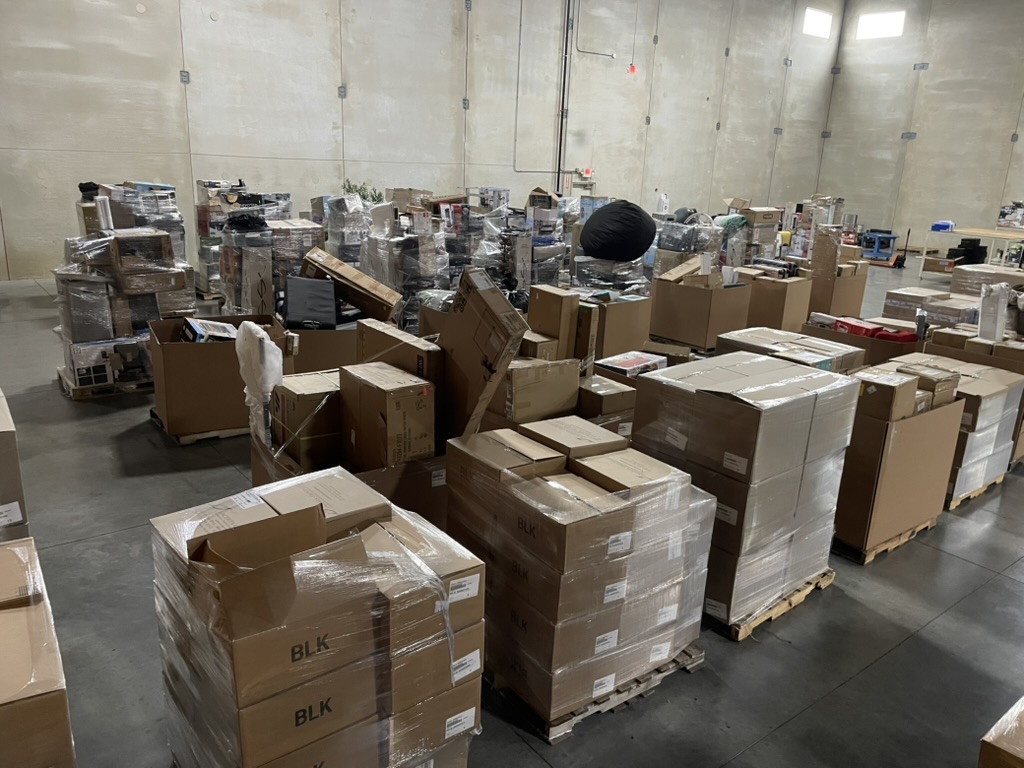
Buy inventory that moves fast enough for the table, trailer, or booth.
Flea market selling is simple on paper: buy low, turn it quickly, repeat. The hard part is finding enough inventory at the right price without wasting your week sourcing. This guide shows when auction buying makes sense, where it can go wrong, and how disciplined vendors use it to keep inventory flowing.
Why auctions work
Why this model fits flea market vendors
Auction buying works best for vendors who care about turn, price discipline, and choosing inventory lot by lot instead of taking whatever comes in a pallet.
You can source on a repeatable schedule
Surplus Depot runs auctions every week. That matters when you need a regular buying routine instead of hoping to get lucky on sourcing days.
You set the ceiling before emotions kick in
You choose your max bid based on expected booth price, not on what a seller is asking. If the number stops making sense, you let it go.
You buy in lot sizes that match your operation
A flea market vendor usually does not need a full truckload. Individual auction lots let you buy enough to test categories, fill gaps, or restock proven sellers.
You are not buying completely blind
Lots include photos and condition notes. That does not guarantee outcome, but it is a better decision setup than bulk mixed merchandise with no lot-level detail.
$1 starts and no reserves create real buying opportunity
Every lot has to find a price. That creates room for disciplined buyers, especially on categories other bidders misread or ignore.
You can start small, learn, and scale
You do not need to bet big. Win a few lots, track what actually sells off your table, then increase spend in categories that turn fast.
The process
How flea market vendors use Surplus Depot auctions
A simple buying routine from online bidding to pickup in Aurora.
- 1
Browse the live HiBid catalog for booth-friendly lots
Start with categories that sell well in flea market settings: tools, small appliances, household goods, storage, decor, seasonal, and impulse-friendly electronics. Do not shop for what looks interesting. Shop for what your customers actually buy.
- 2
Read photos and condition notes before you bid
Look for quantity, visible wear, missing accessories, packaging condition, and whether the lot looks easy to sort and price for a market table. Read every note. Items are sold as-is. There is no public preview period — the listing is your due diligence.
- 3
Back into your max bid from your real selling price
Estimate what the items will sell for at your market, not what they sell for new online. Then subtract your target margin, market fees, travel, setup effort, and expected duds. That number is your cap.
- 4
Bid using the max bid feature
Enter the highest number that still leaves room for profit. HiBid will bid up to that limit automatically. Vendors lose money when they start treating bidding like winning is the goal.
- 5
Get notified if you win
After the auction closes, winning bidders receive an email. Your credit card is charged automatically. You will get a link to schedule pickup by appointment.
- 6
Schedule pickup in Aurora, IL
Bring enough vehicle space and think ahead about your next setup. Plan how you will sort winnings into fast sellers, bundles, and problem items once you are home. The vendors who do this well buy for the next two or three selling days, not just one weekend.
Is this right for you?
Good fit vs. not a fit
Quick check before you invest time and pickup miles.
We're a Good Fit If
- You sell regularly at flea markets, swap meets, or weekend markets and need steadier inventory flow
- You are comfortable buying from photos and condition notes with no guarantee of perfect condition
- You know how your local crowd shops and what price points move fastest
- You want to choose individual lots instead of buying a full mixed pallet
- You can stay disciplined and pass when bidding no longer leaves room for profit
- You can pick up in Aurora, IL, or bid only on lots that offer shipping when you need it
We're Not a Fit If
- You need every item to be tested, complete, and retail-ready
- You do not want any risk from returns, missing parts, or cosmetic issues
- You want fixed wholesale pricing instead of competitive bidding
- You are looking for hands-off fulfillment or a dropship model
- You do not have a way to sort, transport, and merchandise mixed inventory
- You cannot make the drive to Aurora, IL for pickup and shipping is not available on the lots you want
Common questions from flea market vendors
Is auction inventory actually good for flea markets, or is it better for online sellers?
It can be very good for flea markets if you buy categories that customers understand quickly and can carry home easily. The model works best when you focus on visible value, practical use, and price points that move on the spot.
What is the advantage over buying pallets?
Control. With pallets, you usually take a broad mix whether you want it or not. With individual auction lots, you can buy categories and quantities that match your booth, budget, and local demand.
How do I know what a lot is worth for my booth?
Use your actual market pricing, not retail price. Estimate what the items will sell for at your market, then subtract your target profit, travel, unsold risk, damaged pieces, and setup effort. That gives you your max bid.
What if a lot has a few bad items in it?
That is normal. Items are sold as-is, and mixed condition is part of the model. The question is whether the sellable pieces still leave enough margin after you account for the misses.
Can I start small, or do I need to buy a lot of inventory at once?
You can start small. Many vendors are better off testing a few lots first, learning what their buyers respond to, and then increasing spend once they know what turns reliably.
Are these auctions open to the public? Do I need a business license?
Yes, they are open to the public. You do not need a dealer license, resale certificate, or business registration to participate. Flea market vendors, side hustlers, and first-time buyers can bid.
Do I get to inspect items in person before buying?
There is no public preview period. Use the listing photos and condition notes as your decision tools. If you want additional photos on a specific lot before bidding, email auctions@thesurplusdepot.com and we will do our best to help.
What happens after I win?
You get an email notification, your card on file is charged automatically, and you schedule pickup by appointment in Aurora, IL. Plan vehicle space ahead of time, especially if you are stocking an upcoming market weekend.
Is shipping available?
Shipping is available on select lots. Most buyers pick up in Aurora, IL. Check individual lot listings for shipping availability and estimated costs.
Buy for the next selling day
Stop spending your week chasing scraps.
Buy with a plan and stock your booth with intent.
Browse current Surplus Depot lots, set your max price, and source inventory that fits how flea market vendors actually sell: fast, visible, and margin-aware. No reserves. $1 starts. New auctions every week.
New auctions run every week — use the cadence to plan sourcing instead of reacting to random finds.