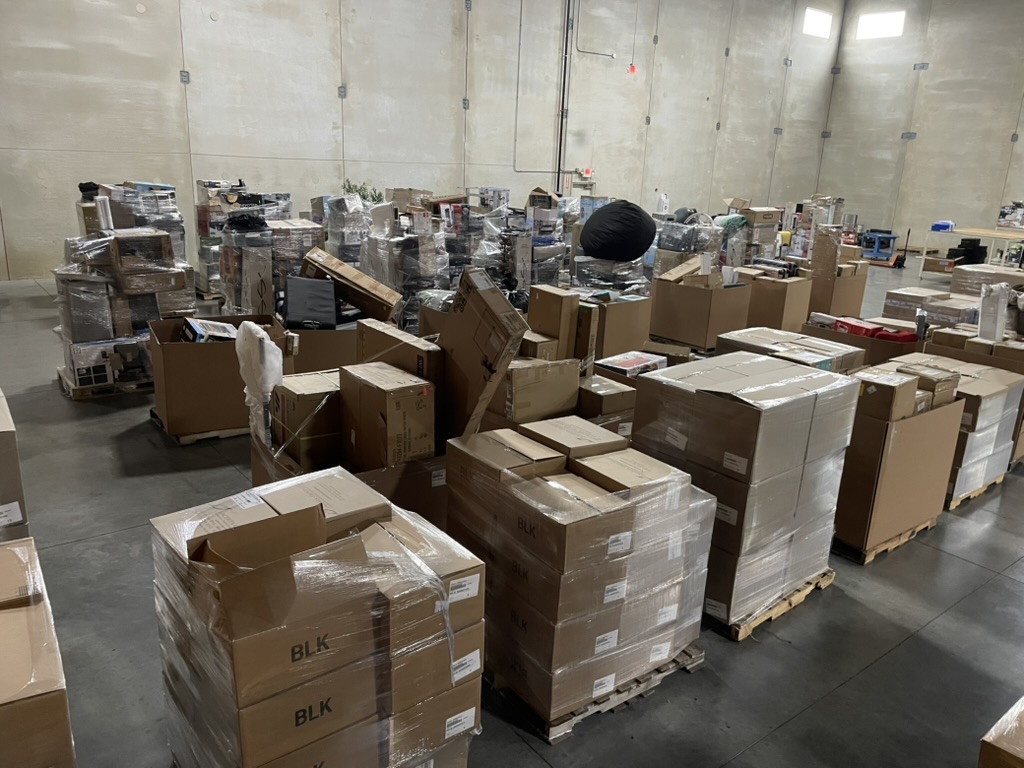
Find inventory worth buying — and build a routine around it.
Your margin is set when you buy. Here is how local resellers build a repeatable sourcing routine — without bulk pallets or driving around chasing one-off finds.
Why auctions work
Why local resellers shift to auctions
Auctions solve the biggest problems local resellers run into: inconsistent supply, wasted time, and unpredictable pricing.
Inventory shows up consistently
Surplus Depot runs auctions every week. You are not chasing garage sales — you are planning around a schedule.
You control your buy price
Set a max bid based on resale value. You either win at your number or you move on. No overpaying unless you choose to.
You can evaluate before buying
Each lot includes photos and condition notes. It is still as-is — but it is not blind like pallet buying.
Buy at whatever scale fits you
Start with one or two lots. No need to commit to a full pallet or truckload.
$1 starts, no reserve
Every item sells. Prices are set by bidders, not inflated wholesale lists.
The process
How local resellers use Surplus Depot auctions
From browsing lots on our site to pickup in Aurora.
- 1
Browse the current auction
Go to our auctions page and open the live HiBid catalog. Look through active lots. Filter by category or search for specific items. Auctions typically run for 1–2 weeks before closing.
- 2
Read the condition notes
Every lot includes photos and a condition report. Pay attention to the condition rating and any notes about missing parts or cosmetic damage. This is your due diligence.
- 3
Decide your max bid before you start
Check what the item sells for on Facebook Marketplace or OfferUp in your area. Subtract your target margin and set that as your ceiling. Do not bid past it.
- 4
Bid using the max bid feature
Enter your maximum. HiBid will automatically bid for you up to that limit. You do not have to watch the auction all day.
- 5
Get notified if you win
Winning bidders receive an email after the auction closes. Your credit card is charged automatically.
- 6
Schedule pickup in Aurora, IL
All pickups are by appointment. You will receive a link to schedule after the auction closes. Bring a vehicle that fits what you won.
Is this right for you?
Good fit vs. not a fit
Quick check before you invest time and pickup miles.
We're a Good Fit If
- You already sell locally and want more consistent inventory
- You are comfortable making decisions based on photos and notes
- You understand your local market pricing
- You want control over what you pay instead of fixed wholesale pricing
- You are willing to pick up inventory in Aurora, IL
We're Not a Fit If
- You need guaranteed working condition on every item
- You are not willing to accept any risk in buying
- You want fully curated or pre-tested inventory
- You cannot make the drive to Aurora, IL for pickup
- You are looking for dropshipping or direct-to-customer fulfillment
Common questions from local resellers
Is this better than garage sales or thrift stores?
It depends on your goal. Garage sales and thrift stores are great for occasional finds. Auctions are better for consistent sourcing and volume — you plan around a schedule instead of hoping for a good day.
How risky is auction inventory?
There is always risk. Items are sold as-is. The advantage is you can see photos and condition notes before bidding, which reduces — but does not remove — uncertainty. Factor some risk into every bid.
How much should I budget to get started?
You can win lots for $5–$50 if you are selective. A reasonable starting budget is $100–$300 — enough to test a few categories and see what sells in your market before scaling up.
Do I need a business license or resale certificate to buy?
No. Surplus Depot auctions are open to the public. You do not need a dealer license, resale certificate, or business registration to participate.
Can I preview items in person before the auction?
There is no public preview period. All information is in the listing — photos, condition rating, and any notes. If you want additional photos on a specific lot before bidding, email auctions@thesurplusdepot.com and we will do our best to help.
What if something does not work when I pick it up?
Items are sold as-is. There are no returns or refunds after pickup. The condition notes and photos are your best tool for making informed bids.
Is shipping available?
Shipping is available on select lots. Most buyers pick up in Aurora, IL. Check individual lot listings for shipping availability and estimated costs.
Your next source
Stop chasing random deals.
Start sourcing with a system you can repeat.
Browse upcoming lots, set your price, and buy inventory you can actually flip. No reserves. $1 starts. Pickup in Aurora, IL.
New auctions run every week — plan your sourcing instead of reacting to random finds.