Find inventory you can list fast — and still leave room for margin.
Selling online gets harder when sourcing turns into guesswork. This guide breaks down where experienced marketplace sellers actually find inventory, what usually goes wrong, and when auction lots are the better play.
Why auctions work
Why experienced online sellers move toward auctions
Auctions do not remove risk. They make it easier to control risk lot by lot.
You can source on a schedule
Surplus Depot runs auctions every week. That matters when you need a repeatable buying routine instead of hoping to find enough inventory on random store runs.
You set a price ceiling before you bid
You decide your max bid based on sold comps, fees, shipping, and acceptable defect risk. If the lot goes higher, you pass.
You are buying with more visibility
Each lot includes photos and condition notes. It is still sold as-is, but you are not buying a full pallet without knowing what is inside.
Consistent inventory without the commitment
You do not need to commit to a truckload. Start with a few lots, learn what your operation handles well, then scale up gradually.
$1 starts, no reserves
Every lot sells. That creates real opportunity, but only for buyers who know when to stop bidding.
The process
How online resellers use Surplus Depot auctions
A practical buying workflow from research to pickup.
- 1
Browse the auction and shortlist lots
Start with categories you already understand. Open the current HiBid catalog, filter for products you know how to test, price, pack, and list efficiently.
- 2
Read the listing carefully
Look closely at photos, condition ratings, and notes about damage, missing parts, opened packaging, or signs of use. As-is matters most when you ignore it.
- 3
Run the numbers
Check recent sold prices, not active listings. Then subtract marketplace fees, shipping materials, likely return risk, labor, and your target margin. That gives you your ceiling.
- 4
Set your max bid
Enter the highest number that still makes sense. HiBid can bid up to that amount automatically, so you are not chasing lots manually.
- 5
Review your wins
After the auction closes, winning bidders get notified and the payment method on file is charged. The faster you move from win to pickup to listing, the better your cash flow.
- 6
Pick up in Aurora
Pickups are by appointment in Aurora, IL. Bring enough vehicle space, packing materials if needed, and a plan for testing, cleaning, photographing, and listing as soon as the inventory gets back.
Is this right for you?
Good fit vs. not a fit
Quick check before you invest time and pickup miles.
We're a Good Fit If
- You already know how to comp products using sold data
- You care more about margin and inventory flow than perfect condition
- You are comfortable buying from photos and condition notes
- You want to choose individual lots instead of buying whole pallets
- You can pick up inventory in Aurora, IL or target shippable lots selectively
We're Not a Fit If
- You need every item to arrive new, complete, and ready to list without issue
- You do not want any uncertainty around returns or overstock inventory
- You need fixed wholesale pricing instead of competitive bidding
- You do not have a system for testing, listing, and moving inventory quickly
- You want a hands-off fulfillment model instead of sourcing and processing inventory yourself
Common questions from online resellers
Is this better than thrift or retail clearance?
It is better when consistency matters more than treasure hunting. Thrift and clearance can still be great for occasional scores, but auctions are easier to build into a repeatable sourcing routine.
How do I know what to bid?
Start with recent sold comps. Then subtract platform fees, shipping, supplies, likely defect risk, and the margin you need. That final number is your max bid. Do not go over it just because the lot looks close.
What is the real risk with auction lots?
Condition variability is the main risk. Items are sold as-is, and returns inventory can include wear, missing parts, damaged packaging, or functionality issues. Photos and notes help, but they do not remove uncertainty.
Can I start small, or do I need to buy in bulk?
You can start small. That is one of the advantages of individual auction lots. Many buyers begin with a few lots, learn what fits their workflow, and increase spend only after they know their numbers.
Do I need a resale certificate or business license to buy?
No. Surplus Depot auctions are open to the public, so you do not need a reseller permit or formal business setup just to bid.
Is this basically pallet buying?
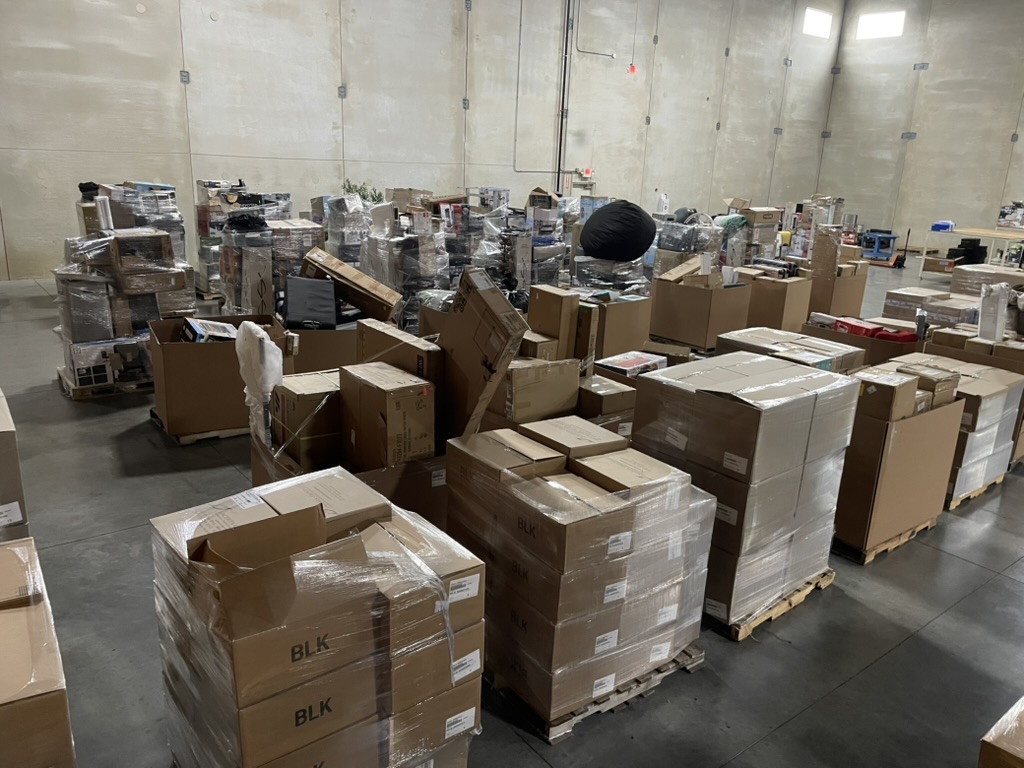
No. The inventory comes in by the truckload, but it is processed into individual lots before sale. That gives buyers more control over what they are actually bidding on.
What makes someone good at this model?
Usually the buyers who do best are not the ones chasing the cheapest price. They are the ones who know their categories, read listings carefully, set hard bid limits, and keep inventory moving after pickup.
A better sourcing routine
Stop relying on random finds.
Buy inventory with a plan, not a guess.
Browse current auction lots, review the details, set your max bid, and source inventory that fits your operation. No reserves. $1 starts. New auctions every week.
Auctions run every week.